BDSRA Australia is the Australian Chapter of the Batten Disease Support and Research Association (BDSRA Australia). BDSRA Australia was founded in 1995 by parents of children affected by Batten disease.
Batten disease is a family of severe, devastating neurodegenerative disorders that primarily affect children. Children with Batten disease are typically born healthy and develop normally before symptoms begin to appear. As the disease progresses, children typically suffer seizures, language decline, vision loss, cognitive and motor decline, dementia and early death. Learn more about Batten disease.
BDSRA Australia is dedicated to improving the well-being of patients and families affected by Batten disease in Australia.
BDSRA Australia seeks to:
We rely on generous donations from the public to fund our services. Find out how you can help turn HOPE into a CURE.
BDSRA Australia maintains a national register of patients affected by Batten disease. This enables us to keep in contact and provide families with information on key updates, useful resources and family events. If you have received a diagnosis of Batten disease, please contact us to be included in the national register.
Maree McCabe AM - Inaugural Patron
Maree is an accomplished CEO and executive with extensive experience in mental health and aged care. She achieved the unification of Alzheimer's Australia into Dementia Australia and led the development of world leading technology that has made a profound difference to the care of people living with dementia, including the global award winning Virtual Dementia Experience, EDIE and Brain Track app. In June 2021 Maree was appointed a Member of the Order of Australia for significant service to people living with Alzheimer’s and Dementia, and to the aged care sector, and included in the COVID-19 Honour Roll for contribution in support of Australia’s response to the COVID-19 pandemic. She was instrumental in securing a $229.4 million allocation for dementia in the 2021 Australian Federal Budget. Maree was appointed Chair of the Australian Aged Care Quality & Safety Council which provides advice to the Federal Government on aged care policy development and implementation. She represented Dementia Australia as a member of Alzheimer’s Disease International and is Chair of the ADI Nominations Committee and a member of the ADI Asia Pacific Regional Committee.
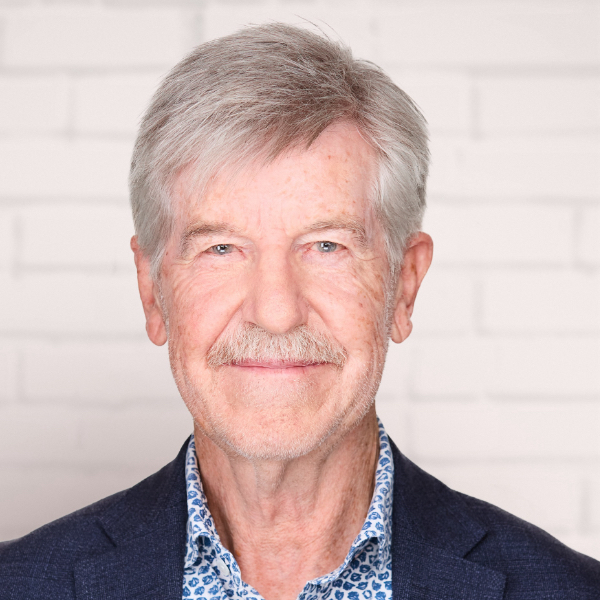
Harry Partridge - President (Acting)
Harry is the father of David, who was diagnosed with CLN2 in 1985. With little information or support available at the time, Harry and his then-wife, Lynne, were driven to create what became the Australian Chapter of the BDRSA after David’s passing in 1993. Harry went on to establish BDSRA Australia and serve as President from 1995 to 2015. He holds degrees in Engineering and Fine Arts, has founded consulting practices in structural engineering and public art curation, and is the proud father of two adult children, Robert and Lauren.
Karen Gregg - Vice President
Karen is a Registered Nurse and mother of three: Georgia, Ellie and Callan. Her daughter Georgia had CLN3 Batten disease and sadly passed away in 2023 at the age of 28. Karen's son Callan, who is 23, also has CLN3. Karen has always valued the support and advice BDSRA Australia has provided throughout her journey to date, and she is looking forward to contributing to the organisation in her new role as Vice President, bringing her wealth of knowledge, professional background and lived experience.
Amanda Gilpin - Treasurer
Amanda is a Registered Nurse working in the remote yet beautiful Pilbara region of Western Australia. The BDSRA has provided such amazing support to our family since our daughter was diagnosed with CLN5 in April 2021, so didn't have to think twice about working with the team at BDSRA as I am very passionate about advocating for both Hollie and all the beautiful Batten babies who have to fight so hard every single day, whilst also raising much-needed awareness for such a rare and heartbreaking condition.
Julia Mickler - Secretary
Julia holds a Bachelor of Arts (Hons) from Macquarie University, a Graduate Diploma in TESOL from University of Technology Sydney (UTS) and a Master of Arts in Applied Linguistics from UTS. She is mother of three and became involved with the BDSRA after her daughter Emily was diagnosed with juvenile Batten disease (CLN3) in 2017.
Vanessa Anderson OAM - Public Officer
Vanessa joined BDSRA Australia in 2000 and managed BDSRA Australia until 2015 where she advocated for and supported families and the community. She has been raising awareness and fundraising for Batten disease since her son, Jordan, was diagnosed with late infantile Batten disease (CLN2) in 1996. Jordan passed away in 2002 and his legacy inspires Vanessa to continue involvement. During that time, Vanessa gained qualifications in the Community sector by completing a Diploma of Community Services Coordination and a Graduate Certificate in Community Management as well as multiple personal development courses. In 2023, Vanessa was recognised on the King's Birthday Honours List and was awarded the Order of Australia (OAM) medal for her service to the community, in particular through Batten Disease awareness (link to story below). Vanessa presently also works in the disability sector for Life Without Barriers, supporting individuals in the community, for over 20 years. Vanessa’s son led her to a career supporting people with disability | Life Without Barriers
Alicia Brown - General Member
Alicia has 3 adult children and 2 grandkids. Her eldest daughter Kiaana, who will be 30 in 2025, was diagnosed with juvenile Batten disease (CLN3) in 2011 at the age of 16. She also has an adult brother with intellectual disability. Alicia has a diploma of business administration, diploma of community services coordination and an advanced diploma in transpersonal counselling and has sat on many NFP boards and alliances, as a grass roots member advocating for the rights of people with disabilities. She is Director of Kiaana's Quest, a service for one model of care that provides Kiaana's NDIS supports in SA. During a 3.5 NDIS/AAT case Alicia became involved with BDSRA in order to support the board and to offer her skills and knowledge regarding NDIS operations.
Amber Rundle - General Member
Amber is a full time mother of 3 young children after having had a long career in Event Management in the legal and corporate sector, she is also a qualified florist. Amber has been involved with fundraising and organising events for many charities over her corporate career and remains a member of the Vision Australia Black and White Committee for vision impaired children which she has been involved with for over 20 years. Amber joined the BDSRA Australia committee in January 2020 and later that year joined the board. Amber served as President for 2 years in 2023 & 2024.
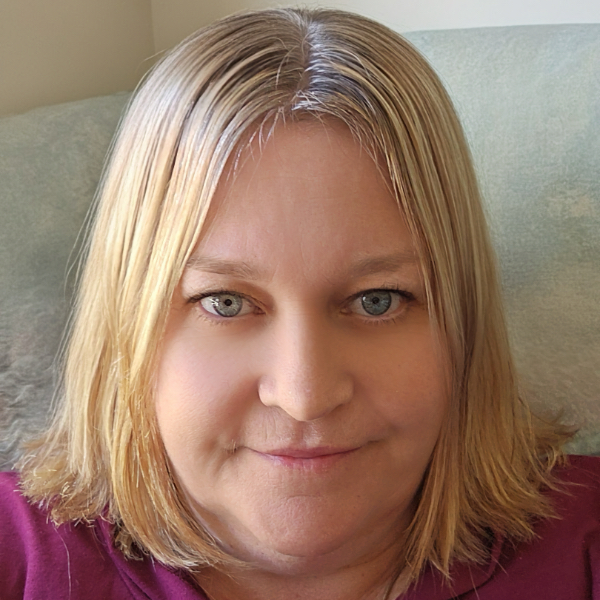
Mandy McWaters - General Member
Mandy is a proud mum of three, with two children affected by Batten disease (Erika 30, Maiah forever 21 and Kenzlie 12). Holding a Certificate III in Individual Support (Ageing and Disability), Mandy is passionate about raising awareness, and contributing to vital fundraising efforts. Her involvement is driven by a deep commitment to creating hope, connection, and better outcomes for all families affected by Batten disease.
Dr Ineka Whiteman - Head of Research and Medical Affairs
Ineka holds a Bachelor of Science (Hons 1) in Neuroscience through combined studies at the Universities of Oxford and Sydney, and a PhD in Medicine from the University of Sydney. In addition to her academic research career, Ineka has held liaison roles to Federal Government Ministers, sat on the Board of Science and Technology Australia, and held senior Medical Affairs roles in a world-leading biotech company. As a consultant to our US partners too - the Batten Disease Support and Research Foundation and the Beyond Batten Disease Foundation - Ineka is passionate about advancing research in Batten disease, improving education and awareness, and facilitating the vital collaborations between clinicians, researchers, industry, advocacy groups and families as we strive for better treatments and a cure for Batten disease.
In 2022, Ineka authored the children's book Max and Abby, a beautiful illustrated narrative that shines a gentle light on the topic of Batten disease, and the highs and lows of life as a sibling of a child with additional needs. Learn more here.
Liz Sanson - Family Support Coordinator
Liz has been part of the Batten disease community since 2016. Her Batten angel, Matilda, will be forever 9.
Liz has spent years providing care, finding support, navigating the NDIS, problem solving in the disability space, and riding the emotional roller-coaster of Batten disease. She is now using the world of experience she has gained to help other families on this journey.
Nikki Hopkins - Executive Officer - Administration & Finance
Nikki is a Sydney based mum with 3 kids. Her oldest son has Autism and Epilepsy which has sparked a keen interest in transferring her skills across to the NFP sector. Nikki has worked at The Sanfilippo Children’s Foundation as well as helping to launch the A-List.
BDSRA Australia's Medical and Scientific Advisory Board is comprised of leading medical and allied health experts with experience in diagnosis, treatment and management of Batten disease. The Advisory Board is a resource for other healthcare practitioners seeking advice on Batten disease management, and also supports BDSRA Australia’s research, education and awareness-raising efforts.
Dr Alexandra Johnson MBBS, FRACP - Advisory Board Chair
Alex is a child neurologist working at Sydney Children’s Hospital, Randwick as well as Royal North Shore and Liverpool hospitals. She also consults from private rooms. She enjoys working with children across many different fields within paediatric neurology, including seizures, headache and disability. She has a special interest in epilepsy and NCL disease.
Professor Ingrid Scheffer AO MBBS PhD FAA FAHMS
Ingrid is a physician-scientist whose work as a paediatric neurologist and epileptologist at the University of Melbourne and the Florey Institute in collaboration with Professor Samuel Berkovic and molecular geneticists, has led the field of epilepsy genetics over more than 25 years. This has included the identification of the first epilepsy gene and many genes subsequently. Her major interests are in the genetics of the epilepsies, epilepsy syndromology and classification, and translational research. She collaborates on research on the genetics of speech and language disorders, autism spectrum disorders, cortical malformations and intellectual disability.
Professor John Grigg MBBS (QLD) MD (SYD) FRANZCO FRACS
John is head of the Discipline of Clinical Ophthalmology and Eye Health at the University of Sydney's Save Sight Institute. He leads the clinical visual electrophysiology service, and has clinical responsibilities, at the Sydney Eye Hospital and the Children’s Hospital, Westmead, Sydney, including specialised clinics for inherited eye disease and glaucoma. He is a member of the eye genetics research group Save Sight Institute, Children’s Medical Research Institute and Children’s Hospital Westmead. His main areas of research are in inherited retinal diseases, glaucoma and electrophysiology of the visual system. He is also a chief investigator on several NHMRC grants looking into new therapies for inherited retinal disorders.
Professor Michael Fahey MBBS (Hons) FRACP PhD
Michael is a clinician-researcher and Fulbright Scholar. He is trained in Paediatrics, Child Neurology and Clinical Genetics and is Head of Child Neurology, Director of Neurogenetics at Monash Health and Professor of Paediatrics at Monash University. His research focuses on neuroprotection and using neurogenetics to understand and improve outcomes for childhood diseases of the brain, muscle and nerve. His teams have developed preclinical models of disease at the Australian Regenerative Medicine Institute, the Ritchie Centre and Monash University. These studies have translated lab-based research in melatonin and stem cells to ongoing Phase II/III neuroprotection trials. Michael has more than 140 publications in leading journals, including Nature Reviews Neurology, Brain, JAMA and Nature Genetics, with >5000 citations.
Professor Angela Morgan BSpPath(Aud Hons) PhD CPSP
Prof. Angela Morgan is an NHMRC Practitioner Fellow and leads the Speech and Language group at the Murdoch Children's Research Institute. She is also Professor of Speech Pathology at the University of Melbourne. Angela has over 20 years of clinical-research experience. She is passionate about improving the communication abilities of children with disability, to optimise their development and enhance life outcomes. Angela currently leads the NHMRC CRE in Speech and Language which focuses on: (i) identification of new gene pathways leading to child speech and language disorders, (ii) conducting genotype- speech phenotype studies for rare genetic syndromes leading to more targeted therapies, and (iii) elucidating the neurobiology of speech and language disorders using quantitative brain imaging techniques.
Dr Drago Bratkovic MBBS FRACP HGSA
Drago is a paediatrician, metabolic physician and clinical geneticist who received training in both metabolic medicine and clinical genetics through the Children’s Hospital at Westmead in Sydney and the Women’s and Children’s Hospital in Adelaide. He took on the position of Head of the Metabolic Clinic in 2008. Dr Bratkovic’s clinical and research interests include the use of using advanced technology for genetic testing, and lysosomal storage disorders including innovative treatment approaches such as enzyme replacement therapy, small molecules and gene therapy.
Associate Professor Anthony Cook PhD
Tony is Head of the Stem Cell Models Group at the Wicking Dementia Research and Education Centre, University of Tasmania. He completed his Doctor of Philosophy studies at the University of Queensland in 2004, and following 6 years of post-doctoral research appointments (UQ and Griffith University), he moved to a teaching-research position at the University of Tasmania in 2009, and then the Wicking Centre in 2015. Here, he leads and collaborates on projects utilizing pluripotent stem cell cultures and CRISPR/Cas gene editing to study genetic diseases causing neurodegeneration in children, gene-environment interactions in amyotrophic lateral sclerosis, and mechanisms of how axons degenerate. A regular contributor to NCL research events and conferences here and abroad, Tony’s work in stem cell models of CLN3 Batten disease has attracted numerous competitive grant funding including from BDSRA Australia, Beyond Batten Disease Foundation and the Medical Research Future Fund.
Dr Nicholas J.C Smith MBBS (Hon), DCH, FRACP and PhD (Cantab)
Nick is a paediatric neurologist at the Department of Paediatric Neurology at the Women’s and Children’s Hospital in Adelaide, specialising in paediatric and adult neurometabolic diseases with a particular interest in the disorder of lysosomal function. He maintains a conjoint academic appointment with the University of Adelaide School of Medicine. His clinical and scientific research interests focus upon defining the pathological mechanisms underpinning neurological forms of lysosomal disease in order to inform the development of novel therapeutic approaches, including gene-based therapies for children and adults with lysosomal and related neurodegenerative disorders.
Lisa Tilbrook Master of Speech Pathology (MSLP)
Lisa is a senior speech pathologist at Thrive Health Centre in South Australia, managing a multi-disciplinary allied health team servicing people with disabilities and developmental delay. She has a special interest in Augmentative and Alternative Communication (AAC), providing communication access through assistive technology to people with complex cognitive and physical impairments. Lisa holds a Master’s Degree in Speech Pathology from Flinders University and a Graduate Certificate in Education (Complex Communication Needs) from Edith Cowan University. She is a registered Positive Behaviour Support practitioner through the NDIS, and a member of the Association for Positive Behaviour Support Australia (APBSA).