
Blair from Courageous Parents Network (CPN) shares about Understanding Baseline and how CPN can help support families navigating the unexpected journey of life with a medically complex child.
Parents often notice changes in their child’s health before anyone else. With a serious medical condition, those changes can sometimes be sudden and clearly linked to an event. Other times they are subtle, unfolding slowly over time until they become part of a larger pattern.
When a change feels lasting rather than temporary, clinicians may describe it as a shift in a child’s baseline. Baseline is the reference point used to understand a child’s usual state of health, development, and functioning. It is what we compare against when we are trying to understand whether things are improving, stable, or changing.
For children with complex medical needs, baseline is rarely fixed. Over time, families may notice that the “highs” are not as high as they once were, and the “lows” can be more pronounced or prolonged. Parents play a critical role in identifying these shifts. The ability to describe what is changing day to day makes families essential members of the care team. At the same time, naming changes can make them feel more real, which can bring grief, worry, or uncertainty about what comes next.
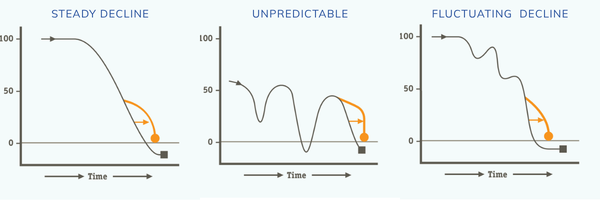
Tracking Baseline
Some families find it helpful to keep informal notes or a journal of their child’s symptoms, behaviors, and overall functioning. This might include sleep patterns, comfort levels, energy, communication, or participation in daily activities. Care teams may also ask families to share observations over time, since these patterns are often most visible at home. Comparing notes with clinicians can help create a clearer picture of change and may also support planning for what could come next.
Baseline and Goals of Care
Understanding baseline is especially important when making medical decisions, particularly during acute illness or sudden change. Each shift in baseline can prompt reflection on what quality of life looks like now and whether current goals of care still fit your child’s needs and your family’s priorities.
Sometimes there is time to reflect. Other times decisions must be made quickly. In those moments, your understanding of baseline becomes a grounding tool, helping you and the care team make decisions that are consistent with your child’s current reality and your family’s values.
Courageous Parents Network offers more detailed information and guidance on these topics,
including decision-making, goals of care and advance care planning. Visit
CourageousParentsNetwork.org or the section specific to medical complexity, MedicalComplexity.org.

Courageous Parents Network Offers Digital Tools to Guide You, No Matter Where You are in
the Care Journey
Caring for a child with Batten disease can feel overwhelming, as you navigate complex medical
needs, changing abilities, and deep emotional challenges. Courageous Parents Network offers
resources for families facing serious childhood illness, with guidance for today and what lies
ahead, plus a Media Library, blog, and events designed to connect and support you. Wherever
you are in your journey, you are not alone.
Here’s how it can help:
Navigating Medical Complexity
Batten disease often involves frequent decisions about seizures, feeding, mobility, and care
coordination. This tool offers videos, guides, and practical resources organized into
phases—Orienting, Navigating, and Moving Forward—to help you better understand what to
expect and how to advocate for your child.
NeuroJourney
Designed for specifically for families of children with severe neurological conditions, including
Batten disease, this tool offers resources organized through four phases - Adapting to
Diagnosis, Building Strengths, Adjusting to Changes, and Navigating Decline – to help you to
locate where you are in the care journey. The tool explores the interconnected relationship of
the brain and body systems helping parents anticipate what medical complications may be part
of their child’s life and explore the emotions that often accompany changes in baseline.
NeuroJourney, explained in this video, is available in 5 languages and audio formats.
Coping with Loss
Created for bereaved families, Coping with Loss offers perspectives on loss and grief from
families and clinicians of the CPN network. This digital tool is also organized into
sections—Understanding Grief, Coping with Loss, and Maintaining Connection—with
complementary resources and perspectives from families and caregivers on topics such as
identity, caring for the siblings and continuing your bond with your child.
For Clinicians and Care Teams
If you’re working with a family, this portal can help you better understand the lived experience.
It includes parent voices and tools to support more compassionate, coordinated care.